
AI in FP&A: Can You Trust an AI-Generated Financial Forecast?
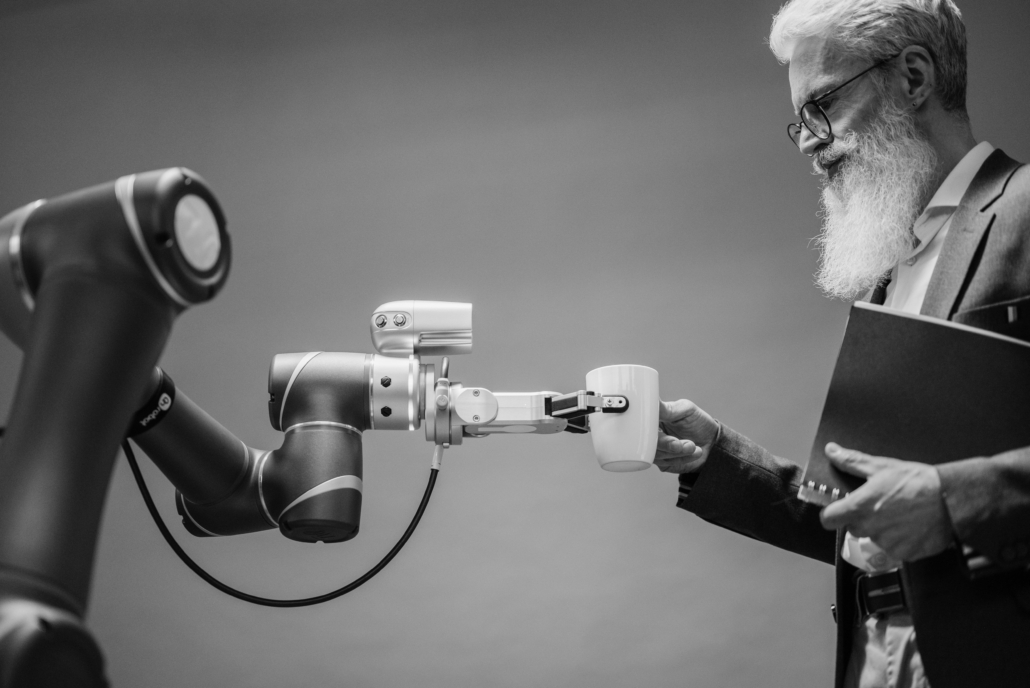
I wouldn’t have written this article a few years ago.
Mostly because nobody was asking me whether I trusted the financial forecast built by a robot.
Finance has changed.
Now AI can analyze historical results, identify patterns, generate baseline forecasts, flag anomalies, help build scenarios and explain variances.
Some newer systems are moving toward something even more interesting: continuously watching the business and initiating analysis when conditions change.
If you’re in FP&A, you’ve probably already started thinking about what this means for your job.
If you’re a CFO, you may be thinking about something slightly different:
How much of this should I actually trust?
That’s the question I care about.
It is also different from deciding how much autonomy to give AI agents in Finance. A forecast can inform a decision without being allowed to execute one.
Because I have spent enough of my career questioning forecasts built by humans.
I’m not suddenly lowering my standards because the spreadsheet learned to talk.
First, What Can AI Actually Do in FP&A?
Let’s get one thing out of the way.
AI in FP&A isn’t one thing.
The term is getting slapped onto enough finance products right now that we’re going to have to be a little more specific.
Today, AI-enabled FP&A tools can assist with things like:
forecasting,
variance analysis,
scenario modeling,
data analysis,
anomaly detection,
management commentary,
and repetitive planning workflows.
Some tools use machine learning to generate statistical baseline forecasts. Others use generative AI to explain results or interact with financial information conversationally. Emerging agentic systems go further by monitoring information and initiating analytical workflows.
That’s a pretty meaningful change.
If you’ve ever spent several days gathering data before you could even begin analyzing it, you can probably see the appeal.
I certainly can.
There are pieces of FP&A work I would happily hand to a machine without so much as a goodbye lunch.
But producing a forecast and believing a forecast are two different jobs.
That’s where this gets interesting.
Let’s Say AI Tells You Revenue Will Be $108 Million
Great.
Now what?
This is where I want you to resist something.
Don’t immediately ask whether the algorithm is sophisticated.
Ask the same annoying questions you’d ask one of your analysts.
Why $108 million?
What changed?
Which drivers matter most?
What assumptions are underneath it?
What information did the system use?
What information doesn’t it have?
What would need to happen for the forecast to be wrong?
And here’s one I think we’re going to be asking much more often:
Does the machine know something the people running the business haven’t told Finance yet?
Because that would be useful.
The opposite is considerably less useful.
AI Has One Advantage Humans Will Never Have
It doesn’t get tired.
It can process enormous amounts of information.
It doesn’t mind checking another dataset.
It isn’t sitting at 6:14 p.m. wondering whether anyone would notice if the final three variance explanations said “timing.”
That matters.
AI and machine-learning forecasting can identify patterns across historical information far faster than a person manually working through the same data. Modern tools can also continuously refresh forecasts as new actuals and operational information become available.
That’s a real advantage.
But now let me give the humans one.
The Machine Doesn’t Sit in the Sales Meeting
At least not yet.
Imagine the historical data says your revenue trajectory looks healthy.
The pipeline data looks reasonably healthy too.
AI produces a baseline forecast.
Looks good.
Meanwhile, your VP of Sales just spent an hour with the team and noticed something.
Customers aren’t saying no.
They’re delaying decisions.
Nothing dramatic has happened yet.
The CRM doesn’t fully reflect it.
Revenue certainly doesn’t reflect it.
But something has changed.
An experienced finance person hears that conversation and starts paying attention.
Maybe they change the forecast.
Maybe they don’t.
But now they’re watching.
This is one of the things I don’t want FP&A to lose as AI gets better.
Business context arrives before clean data sometimes.
The best FP&A people have always been good at noticing that.
And Sometimes the Machine Will Notice First
Now flip the example.
Nobody in Sales thinks anything has changed.
But AI notices:
conversion rates slipping,
sales cycles lengthening,
average deal size declining,
customer usage softening,
or some combination nobody has put together yet.
Now I’m interested.
Very interested.
This is where I think AI gets genuinely exciting for FP&A.
Not because it gives us an answer.
Because it gives us something worth investigating.
That’s a very different relationship with the technology.
I don’t want AI to tell me what to think.
I’d love for it to tell me where I should look.
Baseline Forecasts May Become Cheap
This is the part I think Finance should be thinking about now.
What happens when producing the first forecast becomes easy?
Not perfect.
Easy.
You load the information.
AI analyzes history.
It incorporates drivers.
It produces a baseline.
Maybe it generates several scenarios.
Maybe it drafts the commentary too.
Some of these capabilities already exist in current planning tools.
The amount of human effort required to get to Version 1 starts dropping.
That’s wonderful.
But it also changes what valuable FP&A work looks like.
If generating the forecast is cheap, then challenging it becomes more valuable.
That’s where I’d want my team spending time.
Your FP&A Team May Stop Building So Much
If you’re leading an FP&A team, think about your last forecasting cycle.
How much time went into:
collecting information,
cleaning it,
consolidating files,
updating formulas,
rolling periods,
preparing variance commentary,
formatting outputs,
and getting everything ready for someone to actually think about it?
Now imagine much of that gets compressed.
What do you want your team doing with the time?
This is not a rhetorical question.
Because I don’t want us automating eight hours of work and then inventing eight new hours of reporting.
Finance is capable of this.
We’ll have the productivity gain turned into a weekly 74-page management package by Thursday.
I’d rather spend the time talking to the business.
AI Doesn’t Eliminate Assumptions
This is where I think some of the AI forecasting conversation gets too enthusiastic.
Every forecast contains assumptions.
AI doesn’t change that.
It may estimate some assumptions statistically.
It may identify relationships humans missed.
It may update them faster.
But you’re still making statements about a future that hasn’t happened yet.
IBM, for example, notes that AI forecasting quality depends heavily on complete and accurate underlying data and sufficient historical information.
So let’s say your AI forecast assumes customer behavior will continue to resemble historical patterns.
Fine.
What if you just changed pricing?
What if a competitor entered the market?
What if the Sales organization changed?
What if the company launched a product?
What if your largest customer told the account team something that hasn’t entered any system?
Historical information can be extraordinarily useful.
It can also be a very sophisticated way of assuming tomorrow resembles yesterday.
Humans do this too, by the way.
We just use PowerPoint.
The Most Dangerous AI Forecast May Be the One That’s Usually Right
Stay with me here.
Suppose your AI forecast becomes very accurate.
Everyone gets comfortable.
Month after month, it performs well.
People stop challenging it quite as much.
Then something structurally changes.
This is not an AI-specific problem.
Humans do the same thing with models that have worked for years.
Success creates trust.
Trust can become complacency.
That’s why I wouldn’t only track:
Was the AI forecast accurate?
I’d also want to know:
Why was it accurate?
Which drivers mattered?
Where was it wrong?
What conditions would cause the model to behave differently?
Which assumptions are becoming less reliable?
You don’t want your first serious discussion about model behavior happening after the model fails.
That’s an unpleasant meeting.
I’ve attended its relatives.
What Should Humans Still Own?
This is where I’d draw the line today.
Let AI do more of the mechanical work.
Let it analyze.
Let it search for patterns.
Let it produce a baseline.
Let it flag anomalies.
Let it generate scenarios.
Let it draft commentary.
But I still want humans owning:
Assumptions.
Context.
Challenge.
Trade-offs.
Decisions.
And most importantly:
Accountability.
If the CFO asks why we’re hiring 30 people based on the forecast, “the AI said so” is not going to age particularly well.
Someone needs to understand the recommendation well enough to defend it.
Or reject it.
Here’s How I’d Review an AI-Generated Forecast
If somebody handed me an AI forecast tomorrow, I wouldn’t begin by admiring the technology.
I’d ask you to sit down with me and walk through five things.
1. What information did it use?
Historical actuals?
Pipeline?
Headcount?
Pricing?
Operational metrics?
External data?
Customer behavior?
Let’s know what’s actually inside the machine’s field of vision.
2. What can’t it see?
This might matter more.
Customer conversations?
Upcoming organizational changes?
A product problem?
A pricing decision that hasn’t happened yet?
Something everyone in Operations knows but nobody has entered anywhere?
Write those down.
3. Which drivers explain the result?
If revenue is increasing 14%, show me why.
I don’t care whether the answer came from Sarah, Steve or a neural network.
Fourteen percent still has to come from somewhere.
4. Where does the forecast disagree with management?
Now we’re having fun.
Suppose AI says $92 million.
Management says $100 million.
Please don’t average them and call it $96 million.
Ask why they disagree.
Maybe management knows something the model doesn’t.
Maybe management is being optimistic.
Maybe the AI is overweighting history.
The disagreement is information.
Use it.
5. What decision changes because of this?
Hiring?
Spending?
Cash?
Inventory?
Capacity?
Investment?
If nothing changes, I’m not sure why we’re spending so much time admiring the forecast.
The purpose of FP&A is still the decision.
AI hasn’t changed that.
I Think We’re Heading Toward Two Forecasts
Here’s where I think this gets interesting next.
I can imagine more companies eventually maintaining something like:
The machine baseline
and
the management forecast.
The machine says:
Based on the information and patterns I can see, here’s the expected outcome.
Management says:
Based on additional context, strategy and judgment, here’s what we believe.
Then FP&A studies the difference.
Not because one is automatically right.
Because the disagreement itself may tell you something.
Imagine doing that consistently.
Where does management systematically outperform the model?
Where does the model outperform management?
Which departments are overly optimistic?
Where does human judgment add information the data couldn’t see?
Where does human judgment mostly add hope?
Now that is an FP&A dataset I’d like to have.
AI Might Make FP&A More Human
I realize that sounds backwards.
But think about it.
A lot of FP&A work became mechanical because somebody had to do the mechanics.
Gather.
Clean.
Reconcile.
Update.
Format.
Explain.
Repeat.
If AI takes a meaningful portion of that away, what’s left?
Talking to people.
Understanding the business.
Challenging assumptions.
Making judgment calls.
Explaining trade-offs.
Helping management decide.
In other words, the parts of FP&A that require understanding humans.
I’m fine with that trade.
The machine can have the spreadsheet maintenance.
I’ll take the weird Sales conversation.
So, Should You Trust an AI Forecast?
Yes.
And no.
Helpful, I know.
I’d trust it the same way I trust any serious financial model:
after I understand enough about how it reached the answer.
AI shouldn’t get a lower standard because it’s new.
It also shouldn’t get a higher standard because it’s impressive.
Use it.
Test it.
Compare it against actual results.
Learn where it’s strong.
Learn where it fails.
Challenge it.
And please don’t let anyone end a forecast discussion with:
“That’s what the AI gave us.”
We’ve spent years trying to get Finance to stop saying:
“That’s what the model says.”
I’m not starting over.
Related AI and Forecasting Guides
For the human process the AI forecast still has to support, use the FP&A forecasting process. For the governance question beyond forecasting, read AI agents in Finance.






What would you need to see before trusting an AI-generated forecast enough to put it in front of management?