
The Quiet Revolution: AI in FP&A 2025

The most useful AI conversation in FP&A has changed.
A year ago, a lot of the discussion was still about whether AI could write a formula, summarize a variance or save someone fifteen minutes in Excel.
Those uses are fine.
They are also the least interesting part now.
The question I care about is what happens when AI becomes part of the finance workflow itself—reading information, proposing explanations, checking assumptions, preparing analysis and eventually taking limited actions.
That is a much bigger change than “ChatGPT can help with Excel.”
It is also where I think Finance needs to become considerably less impressed by demos and considerably more specific about controls.
I do not think AI should “think for Finance”
I used language like that more casually when these tools were newer.
I would not use it now.
AI can reason over information. It can identify patterns. It can generate hypotheses and compare scenarios.
It does not possess the organizational judgment of the CFO, Controller or FP&A leader who understands why the number matters, which source is unreliable, what management is actually deciding, and where incentives may be distorting the input.
That distinction is not philosophical trivia.
It tells me where AI belongs in the process.
The first real use case is compression
Finance consumes an absurd amount of information.
Management commentary. CRM notes. operating metrics. contracts. board materials. accounting detail. emails explaining why a project moved.
AI is very good at compressing that material into something a person can inspect faster.
I can imagine an FP&A workflow where the model pulls the largest forecast variances, retrieves the relevant operating commentary and produces a first-pass summary of likely drivers.
That does not replace variance analysis.
It changes where the analyst begins.
Instead of spending the first hour assembling evidence, the analyst spends it challenging the evidence.
That sounds subtle. It is not.
A lot of finance work is search.
Where is the file? Which version? What did Sales say last month? Which assumption changed? Why did this account spike? Who owns this metric?
If AI reduces the cost of retrieving context, senior finance people can spend more time on interpretation.
That is the productivity opportunity I find more believable than replacing half the department because a chatbot can produce a waterfall chart.
Finance is not short of charts.
It is short of uninterrupted judgment.
Variance analysis is an obvious candidate—with guardrails
Suppose actual gross margin misses forecast by 240 basis points.
An AI-enabled workflow could identify the variance, retrieve product mix, pricing, labor and vendor data, compare the movement with prior periods and propose several explanations.
Useful.
Now the controls.
Did it use the closed accounting period? Are definitions consistent? Can every factual claim be traced to a source? Did it confuse correlation with cause? Did a missing data feed disappear from the explanation?
I want the AI to accelerate investigation while leaving a proof trail a finance person can review.
“The model said margin fell because of mix” is not acceptable evidence.
Forecasting is where AI gets tempting very quickly
Give a model history and it can generate a forecast.
That demo takes about four minutes.
Then the business begins.
A major customer is renegotiating. A product launches late. Sales changes territories. Hiring freezes. A competitor cuts price. Management deliberately invests ahead of revenue.
Historical patterns do not contain all of that.
I like AI for generating a baseline, detecting unusual movements, testing relationships and challenging assumptions.
I do not want the baseline quietly becoming “the forecast” because it arrived with confidence intervals and a tasteful interface.
The most valuable output may be a question
This is an area where I think AI fits FP&A particularly well.
Instead of asking the system to produce the answer, ask it to identify what does not make sense.
Revenue grows 18% while sales capacity grows 2%. Why?
Gross margin improves despite a mix shift toward lower-margin products. What assumption explains it?
Cash deteriorates while EBITDA improves. Which working-capital drivers moved?
Those are good prompts for a finance team too.
AI can help scale skepticism.
I would rather automate the first layer of questioning than automate the final judgment.
AI agents raise the stakes because they can act
There is a meaningful difference between a model that suggests an entry and an agent that posts it.
Between an AI that drafts a collection email and one that sends it.
Between a tool that identifies an unusual vendor payment and one that changes a payment workflow.
The more action authority we give the system, the more I care about permissions, approval thresholds, logging, reversibility and segregation of duties.
This is ordinary internal-control thinking applied to a new actor.
The actor happens to work very fast and never gets embarrassed.
That is not a reason to give it the keys.
I would classify finance AI by consequence
Low-consequence work can tolerate more autonomy.
Drafting commentary, summarizing documents, formatting analysis, generating first-pass formulas.
Medium-consequence work needs stronger review.
Forecast recommendations, anomaly explanations, account-reconciliation suggestions, customer-risk flags.
High-consequence actions should have explicit human approval and often additional controls.
Posting journal entries, releasing payments, changing master data, communicating externally on material financial matters.
The categories will vary by company.
The principle should not.
Autonomy should rise more slowly than convenience.
Data access is the unglamorous problem underneath everything
AI is only useful in Finance if it can access relevant information.
That immediately creates questions.
Which systems? Which fields? Which entities? Does the model retain prompts or data? Can the provider use the information for training? What happens to confidential forecasts, employee compensation, customer data or transaction information?
I would not let enthusiasm for a use case outrun the company’s data policy.
Finance has too much sensitive information for “I pasted it into the tool and it worked” to be a governance framework.
Definitions remain a human problem
Ask AI to analyze churn when Sales, Customer Success and Finance use three definitions and it will not magically repair the organization.
It may produce a very articulate analysis of the wrong metric.
The same is true for ARR, bookings, active customers, contribution margin and half the other terms companies manage by.
AI increases the value of semantic discipline because it can distribute inconsistent definitions much faster.
Before automating analysis, agree on what the thing is.
Revolutionary concept, I know.
Model risk becomes harder to see when the interface gets easier
A spreadsheet exposes formulas.
They may be ugly, but I can inspect them.
An AI system may produce an answer through a process the user cannot meaningfully trace.
That means validation has to move toward inputs, outputs, source citations, exception testing and outcome monitoring.
I want to know what the system is allowed to use, how often it is wrong in ways that matter, and what happens when it is uncertain.
A polished natural-language explanation can create more trust than a cell formula.
That makes skepticism more important.
The junior-analyst analogy only goes so far
People like calling AI an infinitely patient junior analyst.
I understand why.
It can research, draft and iterate quickly.
But a junior analyst exists inside an organization. They hear tone in a meeting. They learn which source system is unreliable. They can ask why the VP of Sales suddenly changed an assumption. They develop judgment through consequences.
AI does not automatically acquire that context because we gave it access to a folder.
I would use the analogy for workflow design, not as a claim that the machine has become a finance professional.
The apprenticeship question is real
If AI handles more first-draft analysis, formula writing, data cleanup and commentary, how do junior finance people learn?
I do not think the answer is preserving repetitive work for character development.
I do think managers will have to become more intentional.
Ask analysts to review AI output, trace assumptions, explain why an answer is wrong, sit in operating conversations and own smaller decisions earlier.
The old apprenticeship model taught judgment partly through doing tedious work around the judgment.
If AI removes the tedious part, we need to make sure we did not accidentally remove the learning too.
AI should make FP&A more curious, not merely faster
Speed is useful.
I am more interested in whether the team can investigate more questions.
Can we test a downside scenario before the meeting instead of after? Can we analyze customer concentration by another dimension? Can we review every material variance instead of the top five? Can we compare assumptions with external evidence quickly?
That is where productivity becomes decision quality.
Doing the same monthly deck in 40% less time is nice.
Using the recovered time to understand the business better is the point.
I would measure AI ROI in finance like any other investment
Hours saved matter, but they are not enough.
Did close get faster without more errors? Did forecast updates become more frequent? Did analysts spend less time assembling data? Did management get answers faster? Did the company avoid additional headcount? Did a control improve?
I want evidence.
AI has generated enough adjectives.
Finance can contribute nouns and numbers.
The quiet revolution is really a workflow redesign
I still believe something important is changing.
I just describe it differently now.
AI is not turning spreadsheets into sentient coworkers.
It is changing the economics of information work.
Tasks that used to require an hour of searching, drafting or transforming can take minutes. That allows finance processes to be redesigned around review, exception handling and judgment.
The winners will not be the teams with the most AI features switched on.
They will be the teams that decide carefully what the machine should do, what a person should verify, and what still requires human judgment.
That is less cinematic than “finance that thinks for itself.”
It is also a much better operating model.
Reconciliations are a good example of bounded AI
Account reconciliations contain exactly the kind of work AI can help with if the boundaries are clear.
Match transactions. Group likely reconciling items. Flag unusual descriptions. Draft explanations. Identify items that have aged beyond a threshold.
Useful.
I still want Accounting to define the matching rules, materiality, acceptable evidence and approval process.
An AI suggestion that two items offset is not the same as evidence that the account is reconciled.
The system can reduce search effort.
The control owner still owns the conclusion.
Management reporting is another natural fit
Imagine the monthly package after actuals close.
AI can assemble a first-pass list of material variances, compare them with forecast assumptions, retrieve prior commentary and draft questions for business owners.
That could remove a lot of production work.
What I do not want is generic commentary automatically filling the deck because the sentences sound plausible.
“Revenue was below plan due to timing” has survived quite well without artificial intelligence.
The value comes when the tool can point to the actual driver and Finance can verify it.
Board preparation should benefit without becoming synthetic
AI can help a CFO or FP&A leader pressure-test a board narrative.
What questions might investors ask? Which slide conflicts with another? Which assumptions changed since the prior meeting? Where does the narrative overstate certainty?
I like that use because it gives leadership another skeptical reader.
I would be careful about outsourcing the voice itself.
A board should hear management’s judgment, including the uncomfortable parts.
A perfectly polished explanation that nobody in management truly believes is not an upgrade.
The control framework should be designed before scale
It is much easier to decide what AI may do when three people are experimenting than after 70 workflows depend on it.
I would establish some basics early: approved tools, permitted data, human-review requirements, logging, access controls, escalation for uncertain output and ownership of each production workflow.
Nothing about that needs to be bureaucratic.
A one-page policy can be better than a 70-page policy nobody reads.
But “everyone is trying things” stops being charming once those things touch financial reporting.
I expect the finance org chart to change more slowly than the work
People sometimes jump from “AI saves analyst time” to “Finance will need half as many people.”
Maybe in some processes.
But companies have an almost unlimited appetite for questions once answering questions becomes cheaper.
I expect roles to change before entire functions disappear.
Less manual assembly. More review. More business partnering. More system ownership. More pressure on people to understand what the analysis means.
The bar may rise because the excuse “we did not have time to analyze that” becomes less available.
The finance leader’s job is to choose the boundary
This is where I think the conversation ends up.
Not “Should we use AI?”
We will.
The useful question is where autonomy stops.
What can the system draft? What can it recommend? What can it execute? What must a person approve? What evidence must remain visible?
Those boundaries should reflect consequence, reversibility, regulation, data sensitivity and the company’s own control environment.
There is no single correct line for every organization.
There should be a line.
I am optimistic precisely because I do not think the machine needs to be magical
AI does not need to become a synthetic CFO to change Finance.
It only needs to remove enough friction that people can spend more time on work humans are actually good at: questioning assumptions, understanding incentives, communicating tradeoffs and deciding under uncertainty.
That is a substantial opportunity.
It is also more grounded than promising an autonomous finance department where the numbers teach themselves to think.
I want faster Finance.
I want more adaptive Finance.
Mostly, I want Finance with enough time left to notice when the business story and the spreadsheet have stopped agreeing.
If AI helps us do that, the revolution can stay quiet.

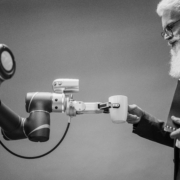





A year later, which AI use cases in FP&A actually survived contact with real finance work?