
Jobless Claims Fell Below 200,000

And Somewhere, an FP&A Model Just Started Lying
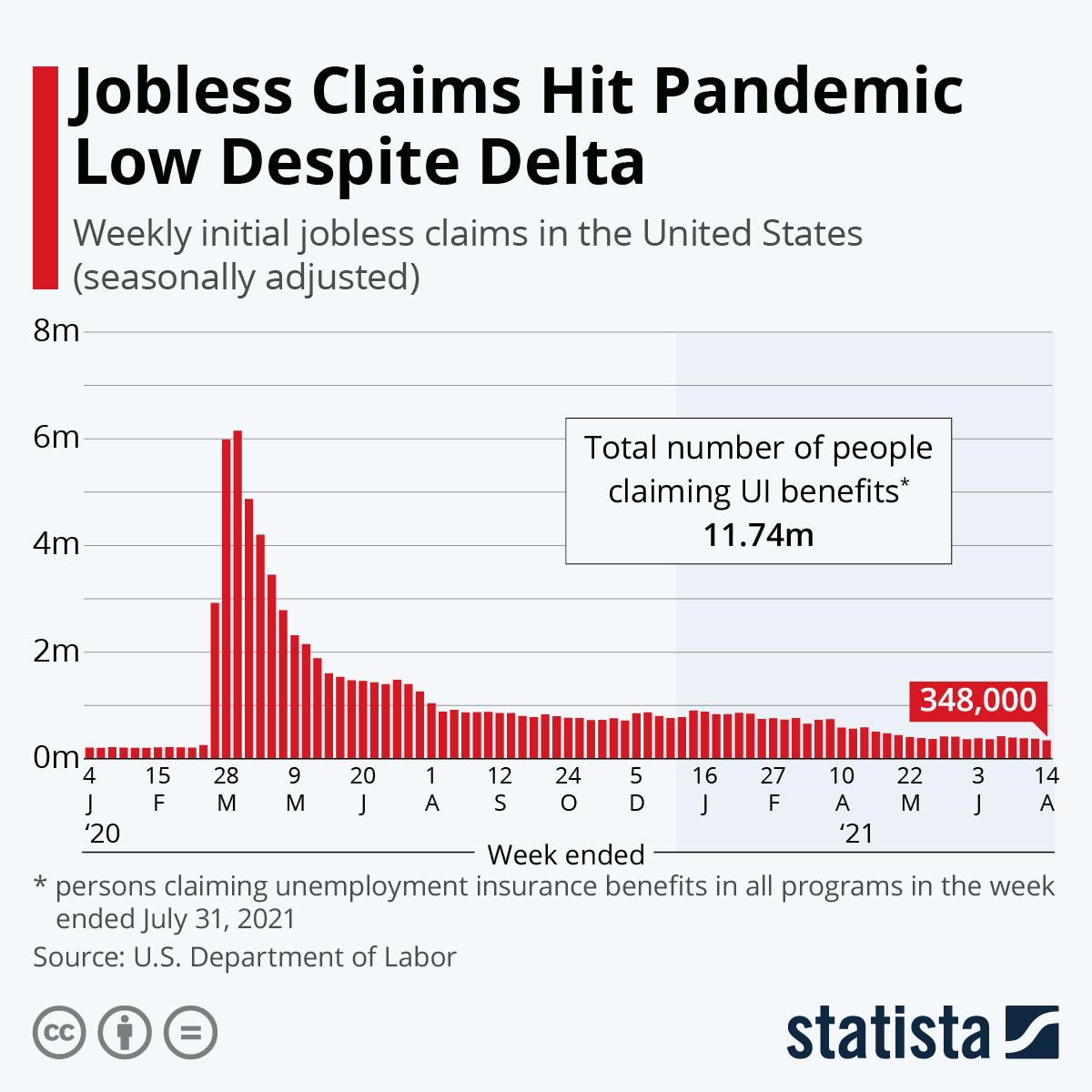
The number dropped.
Below 200,000.
Cue the headline writers polishing the word resilient like it’s a participation trophy.
But if you work in FP&A, that number doesn’t mean “things are fine.”
It means nothing is giving way.
And nothing costs more than pressure that refuses to release.
The number everyone reads wrong
Weekly jobless claims come from the U.S. Department of Labor.
They’re not vibes. They’re behavior.
Claims below 200,000 mean companies are doing something very specific:
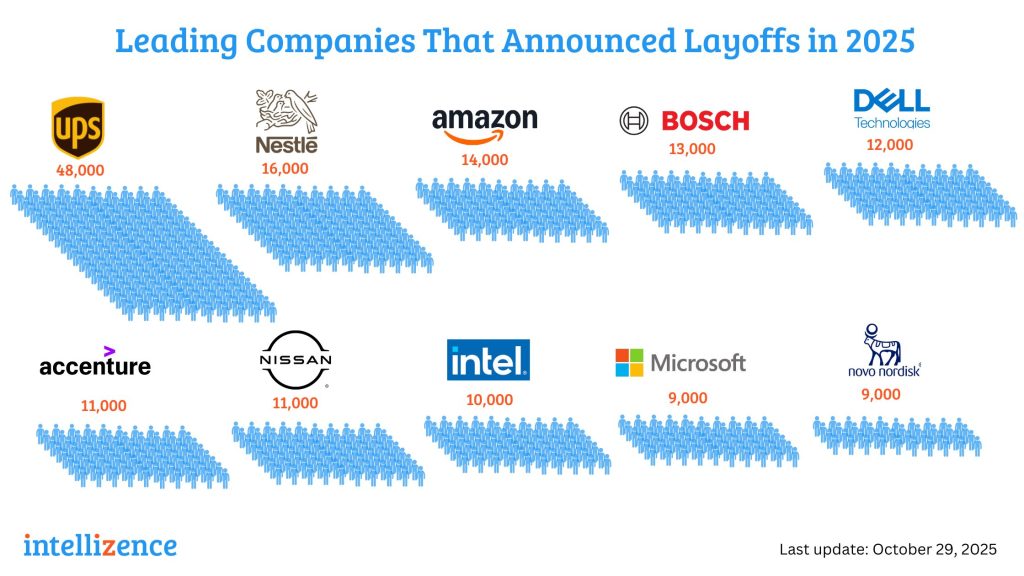
They are not firing people — even when they want to.
That’s not confidence.
That’s fear of replacement costs.
The corporate stalemate nobody budgets for
Here’s what this actually looks like inside companies:
Executives want margins back.
Managers want to keep their teams intact.
Employees know they’re expensive to replace.
So no one moves.
No layoffs.
No relief.
Just salaries creeping up like ivy on an old building.
Every forecast quietly assumes this breaks at some point.
It doesn’t.
Why FP&A gets blamed later
FP&A models are polite.
They assume the labor market will behave rationally.
Headcount slows.
Wage growth cools.
Productivity magically picks up the slack.
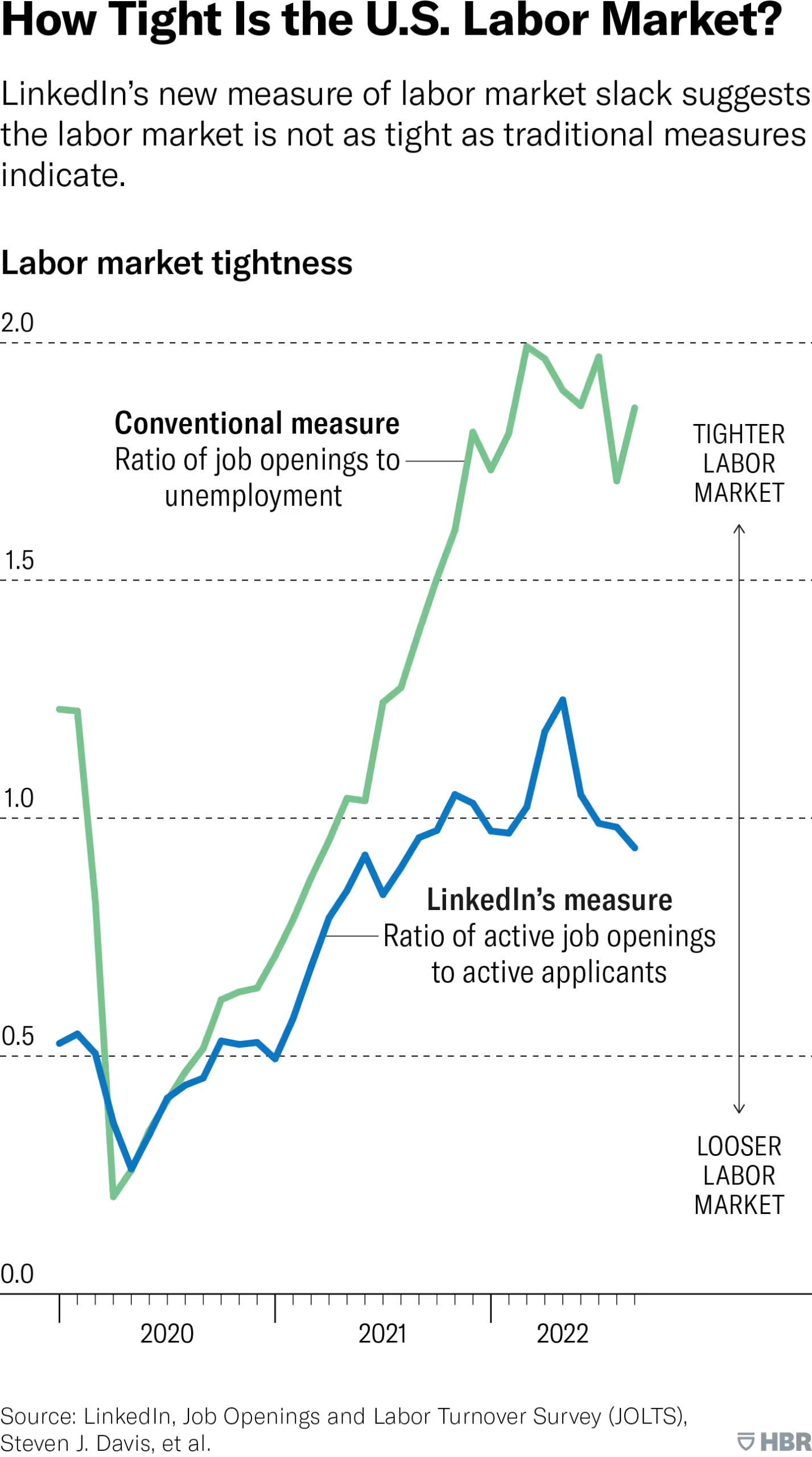
But a tight labor market doesn’t snap.
It grinds.
Instead of layoffs, you get:
Higher retention bonuses disguised as “one-time”
Market adjustments that never roll off
Roles frozen but costs still inflating
The spreadsheet still ties.
Reality doesn’t.
The most dangerous phrase in finance
“Labor stability.”
Stability is what you call it when nothing explodes.
It’s not what you call it when costs keep compounding quietly.
Low jobless claims mean:
You can’t hire cheaper
You can’t downshift easily
You can’t pretend attrition will save you
That’s not upside.
That’s a locked door.
Where good FP&A separates itself
Not by predicting recessions.
By refusing fairy tales.
Strong teams stop modeling headcount like a thermostat and start modeling it like a pressure system.
They ask:
Which roles are price-inelastic?
Where does wage inflation persist even if hiring stops?
What assumptions break if this market stays tight another year?
They don’t sell comfort.
They sell accuracy.
The punchline no one wants
This headline won’t hurt you today.
It hurts you six months from now — when margins miss and everyone swears the forecast “came out of nowhere.”
It didn’t.
The warning was sitting there at 200,000.
The labor market isn’t breaking.
And that’s exactly the problem.
I would not build a forecast from one weekly print
There is an important caveat here. One weekly claims number is not a labor-market thesis.
Claims are noisy. Holidays, weather, seasonal adjustment and ordinary week-to-week movement can make a headline look more dramatic than the underlying trend.
So I would never take one release, type “labor market strong” into the assumptions tab and call it macroeconomic analysis.
What I care about is whether several pieces of evidence are telling the same story.
Claims are one signal. Hiring plans are another. Wage pressure, time-to-fill, voluntary attrition, recruiter activity and what our own managers are experiencing matter too.
The external data should challenge the operating assumptions. It should not replace them.
Low layoffs and strong hiring are not the same thing
This distinction matters enormously for FP&A.
A company can be reluctant to lay people off and equally reluctant to add people.
That creates a labor market that looks stable from one angle and frozen from another.
For a forecast, those conditions have different consequences.
Low layoffs can support household income and demand. Weak hiring can make open roles harder to benchmark because fewer people are moving. Employees may stay put because the outside market feels uncertain rather than because they are delighted with their current job.
I do not want a model that translates “claims are low” into “everything is healthy.”
I want to ask what kind of stability we are looking at.
The headcount plan should contain labor-market assumptions
Most headcount models contain salary, start date and perhaps benefits.
The labor-market assumptions are often hiding in the dates.
If the plan assumes a specialized role opens January 1 and starts February 1, Finance has implicitly assumed a 31-day recruiting cycle.
Was that intentional?
If the company historically needs 90 days, the model is carrying a labor-market opinion whether anyone realizes it or not.
I like making that opinion visible.
For material hiring, I want expected time-to-fill, realistic start timing, compensation ranges and ramp assumptions grounded in what HR and hiring managers are actually seeing.
Then external labor data becomes context instead of decoration.
Wage pressure rarely announces itself as “wage pressure”
It appears in smaller places.
A replacement hire costs 8% more than the person who left. A critical employee gets a retention adjustment. A manager asks to re-level a role because the candidate pool is thin. Contractors stay longer because recruiting is slow.
Individually, each decision may be reasonable.
Together, they can move the payroll forecast materially.
This is why I like a forecast-to-forecast payroll bridge.
How much changed because of headcount timing? How much because of compensation? How much because of attrition? How much because contractor spend replaced employee spend?
“Payroll unfavorable” tells me almost nothing.
The bridge tells me whether the labor assumptions are changing.
A hiring freeze is not automatically a payroll reduction
This catches companies more often than it should.
Leadership freezes hiring and expects payroll to fall.
But filled roles remain filled. Merit increases still happen. Benefits renew. Critical backfills get exceptions. Contractors appear around the edges.
The growth rate may slow without the cost base actually declining.
I want the model to distinguish fewer additions from fewer employees.
If management needs a true payroll reduction, the operating action has to be different.
Finance should not let the phrase “hiring freeze” do mathematical work it cannot do.
Attrition assumptions deserve skepticism in a sticky market
Some budgets quietly depend on natural attrition.
No formal reduction is planned. The model simply assumes people leave and certain roles are not replaced.
That can work.
Until people stop leaving.
If voluntary turnover falls, the savings never arrive.
I like separating known departures from an assumed attrition rate and then asking how sensitive the plan is to that rate.
If the EBITDA target depends on twelve people voluntarily resigning, I would like management to know that before we describe the cost plan as committed.
Retention can be cheaper than replacement and still hurt the forecast
Finance can fall into a strange argument here.
A retention adjustment increases payroll, so it looks unfavorable.
Losing the employee might create recruiting cost, vacancy, productivity loss and a higher replacement salary.
The right decision is not always the lower immediate expense.
I want the forecast to make the tradeoff visible without pretending we can calculate every human consequence to the penny.
Sometimes paying more to retain a critical person is economically sensible.
Sometimes the organization has allowed compensation compression to build for years and is now paying for it.
Those are management issues, not spreadsheet errors.
Scenario planning is more useful than pretending we know the macro turn
I have no interest in making FP&A the company’s amateur Federal Reserve.
We do not need to predict the exact month the labor market changes.
We can model the consequences.
What if hiring gets easier and time-to-fill improves? What if compensation remains sticky? What if voluntary attrition stays unusually low? What if a downturn reduces demand but payroll does not adjust as quickly as revenue?
Those scenarios are actionable because they connect an external condition to our economics.
“The labor market will weaken in Q3” is mostly a prediction.
“If it does not weaken, here is what happens to payroll and margin” is planning.
The business’s own labor data should eventually outrank the headline
External indicators are most useful when we do not yet have enough internal evidence.
Once our own recruiting pipeline, compensation decisions and attrition patterns begin moving, I care more about those.
A national statistic can say one thing while our niche labor market says another.
A healthcare company hiring specialized clinicians may experience a completely different market from a software company hiring general corporate roles.
I want Finance close enough to HR and operating leaders to know the difference.
Macro data should make us curious.
Internal data should make the forecast specific.
What I would put in the monthly forecast review
I would not add a page called “Jobless Claims” to every management deck.
Please do not punish people for reading this.
I would bring labor-market information into the meeting when it changes a material assumption.
Maybe hiring is taking 30 days longer than plan. Maybe replacement salaries are running 7% above budget. Maybe attrition has fallen and expected vacancy savings are disappearing.
Now the external context helps explain what we are seeing.
That is useful.
A chart included because the number was in the news is just another chart.
The question is not whether 200,000 is good or bad
That was the weakness in the original headline framing.
Economic indicators do not owe Finance a simple moral category.
A low level of claims can coexist with slower hiring, sticky wages, cautious employers and very different conditions across industries.
For FP&A, the job is translation.
What does the labor environment imply for our hiring dates, compensation, attrition, capacity and margins?
Which assumptions become less believable?
Which risks deserve a scenario?
That is where the statistic becomes useful.
I do not need the headline to tell me whether the economy is “fine.”
I need the forecast to show what happens if the labor assumptions we were counting on never arrive.
Labor assumptions also affect revenue capacity
There is another side of the model that gets missed when labor is treated only as expense.
If the company cannot hire the people required to sell, implement, manufacture or support growth, the revenue plan may need to move too.
A delayed sales class reduces payroll, but it may also reduce future selling capacity. A delayed implementation team can create backlog. A thin operations team can constrain throughput.
This is why favorable headcount variance makes me cautious.
Sometimes it is efficiency.
Sometimes it is the operating plan arriving late.
If the labor market makes hiring harder than assumed, I want both sides of that equation reflected.
I would also watch productivity claims carefully
When payroll stays expensive, management naturally looks to productivity.
That is reasonable.
But “productivity will offset wage inflation” is not a driver until somebody can explain what changes operationally.
Automation? Better staffing mix? Process redesign? Higher utilization? Lower rework?
I want the mechanism.
Otherwise productivity becomes the financial-model equivalent of “we will figure it out.”
Maybe we will.
I would still prefer not to book the savings first.
Forecasting macro conditions requires humility
The longer I work in Finance, the less interested I am in proving that I can call an economic turn.
Management does not need a dramatic macro prediction from FP&A.
It needs to know which parts of the plan are exposed if the prediction is wrong.
That is a much higher-value exercise.
Identify the assumption. Quantify the consequence. Watch the leading evidence. Update when the evidence changes.
That process is less exciting than declaring that one labor statistic means recession or resilience.
It is also considerably more useful when the CFO has to decide whether to hire, cut, invest or wait.
That is ultimately how I use labor data. Not as a fortune cookie for the economy, and not as a reason to rebuild the forecast every Thursday morning. I use it as another test of the assumptions already sitting inside the model. If the outside evidence and our internal experience begin disagreeing with those assumptions, Finance should notice before the variance report does.
The number is not the answer. It is a reason to ask a better question.
That is a much better use of a headline than asking it to predict the entire economy for us.
Seriously.








When labor data moves in a direction nobody expected, what does your finance team actually change in the forecast, if anything?