
Your First Finance Hire: Are You Solving a Problem or Just Collecting Job Titles?
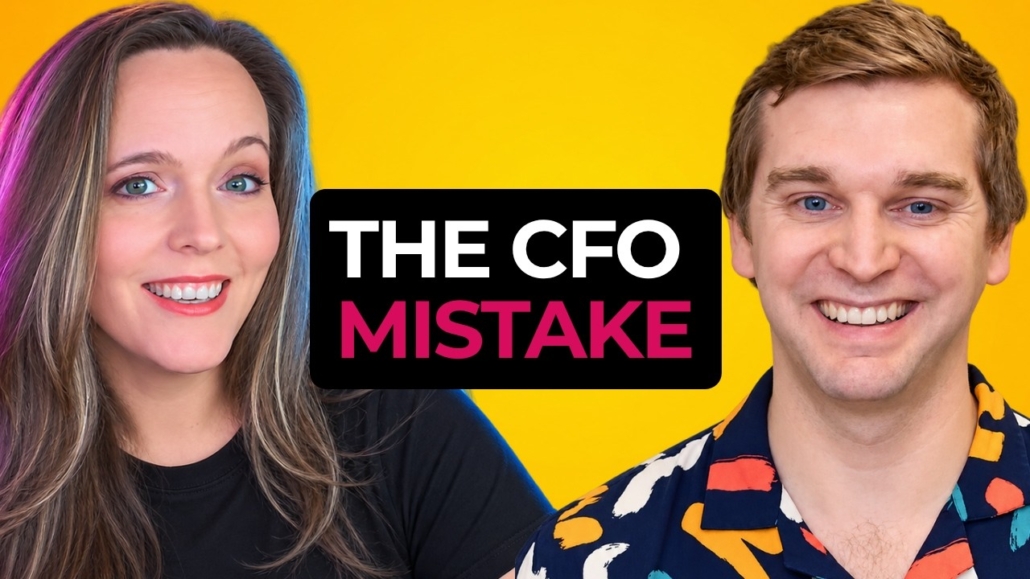
Somewhere right now, a founder is looking at a financial problem and deciding the company needs a CFO. Why a CFO? Well, the company already has a CEO. Probably a CTO. Maybe even a CRO. Apparently, once you’ve collected enough three-letter executive titles, the business starts running itself. Wouldn’t that be convenient?
The accounting is a mess, nobody trusts the cash forecast, and investors have started asking uncomfortable questions. Naturally, the solution is to hire someone with an impressive title and hope the financial problems disappear. I have a few questions about that strategy. Fortunately, I recently interviewed someone who spends a great deal of time helping companies avoid exactly this situation.
Meet Tom Hunter: The Recruiter Who Thinks You Might Not Need to Recruit Anyone
On FP&A Today, I sat down with Tom Hunter, founder of Story Recruitment, an Australian recruitment firm specializing in finance and accounting professionals. Tom works with growing businesses, particularly founders making their first significant finance hire. I wanted his perspective because recruiters get to see what companies think they need before anyone starts asking the difficult questions.
Tom isn’t an FP&A practitioner, and that made our conversation particularly interesting. We weren’t comparing forecasting formulas or arguing about whose spreadsheet has the prettiest assumptions tab. We were looking at what happens before the finance team even exists.
“It all comes back to problems, right? Because ultimately that’s what a business is doing when they’re trying to hire someone. They’re trying to solve a business problem.” — Tom Hunter
There it is. The sentence that should probably appear at the top of every hiring requisition. Once everyone agrees the company needs a CFO, the conversation can become a search for the perfect CFO rather than an examination of whether that was the right decision in the first place.
Want to hear the full conversation? Watch FP&A Today on YouTube. Tom and I discuss first finance hires, fractional CFOs, recruiting mistakes, compensation, AI, and the changing skills finance professionals need.
Congratulations, You’re Hiring a CFO. Does Anyone Know Why?
One of my first questions for Tom was whether a controller might be a better initial hire than a CFO or FP&A analyst. His answer? It depends on what the business already has. I know. An annoyingly sensible answer. But he made a strong case for starting with financial controls and reliable reporting.
“Otherwise, you’re forecasting off of essentially nonsense, right?” — Tom Hunter
I couldn’t agree more. You can build an impressive financial model on unreliable accounting data. Excel certainly won’t object. It will happily calculate your five-year forecast to the nearest dollar, even if the starting numbers are complete fiction. That’s one of the things I love about spreadsheets. They’re wonderfully supportive. Almost to a fault.
A controller or head of finance can establish the accounting foundation: reconciliations, reporting, controls, and dependable financial information. Once those basics are working, FP&A has something useful to analyze. I’ve written separately about when a business should hire a controller, because the title matters a lot less than who actually owns the numbers.
Tom also described a high-growth AI business that had already outsourced its accounting, tax compliance, reporting, and much of its FP&A work. Its first internal finance hire could therefore focus on strategic and commercial decisions. I actually asked whether I could get one of those jobs. Imagine walking into a company where the accounting is organized, the reporting works, and somebody else has handled the mess. Sounds suspiciously pleasant.
The Revenue Mistake That Helped Cost a Founder an Investor
Tom shared a secondhand example involving a founder raising capital. The founder had included goods and services tax in the company’s annual recurring revenue figures, overstating the revenue presented to investors. During due diligence, the discrepancy raised questions. Other issues emerged, and the lead investor eventually withdrew. The tax mistake wasn’t necessarily the sole reason the investment failed; it was part of a broader loss of confidence.
Still, imagine discovering that a portion of the revenue you’re celebrating actually belongs to the government. I’m sure the government appreciates the recognition. Investors aren’t just evaluating your forecast. They’re evaluating whether management understands the business well enough to produce reliable information. If your accounting records, revenue metrics, and financial model disagree, someone has to figure out which numbers are real. Preferably before the fundraising presentation.
I brought up sales and use tax because it’s something I pay close attention to in a U.S. finance environment. Tax compliance can get complicated as a business expands across jurisdictions. An overlooked liability can create real cash consequences, even if it hasn’t appeared in the forecast yet. Ignoring it doesn’t make it disappear. If only accounting worked that way.
Maybe You Need a CFO. Maybe You Need One on Tuesdays.
“There’s what level do you actually need, and do you actually need someone full-time?” — Tom Hunter
Those are two separate questions. A business might need sophisticated financial leadership but only require a few hours of that expertise each week. Tom described fractional arrangements involving a couple of days per week or limited monthly support. That can be perfectly reasonable. You might need someone to improve financial reporting, advise management, prepare for fundraising, or help with capital decisions. But do you need that person sitting in the office forty hours a week? Maybe. Maybe not.
I’d want to understand the workload, complexity, and what existing employees or outside providers already handle. A fractional CFO supported by a good accounting team might be more appropriate than a full-time executive. Or perhaps the business needs a controller because nobody owns reporting. The point is to buy the capability the company needs, not the title that looks best on the organizational chart. It’s a little like buying a minivan because you occasionally drive three people to the airport. Perfectly respectable vehicle. Questionable justification.
The $225,000 Employee Who Still Doesn’t Fix the Problem
Finance teams know how to calculate hiring costs. Salary, benefits, payroll taxes, recruiting expenses, equipment, onboarding. We can model the entire thing beautifully. And then somehow forget to ask whether the employee is going to solve the problem. Let’s consider a hypothetical U.S. business hiring its first senior finance leader.
| First-year expense | Illustrative cost |
|---|---|
| Base salary | $160,000 |
| Payroll costs and benefits, assumed at 25% | $40,000 |
| Recruiting and onboarding | $25,000 |
| Total first-year investment | $225,000 |
These are hypothetical planning assumptions, not market salary benchmarks. Now suppose the employee leaves after six months. The business may have spent approximately $125,000 on compensation, benefits, recruiting, and onboarding before any separation expenses. Reporting is still late. Management still doesn’t trust the forecast. And the company now has the exciting opportunity to repeat the recruiting process. I suppose that’s one way to keep HR busy.
Tom’s approach is to ask candidates how they’ve solved comparable business problems, rather than rely exclusively on job titles and a checklist of software. That makes more sense to me than asking whether someone knows Power BI and assuming a yes means they can transform your finance department. I would rather hear how they fixed a reporting problem, what they discovered, and what changed afterward. If you’re weighing the cost, see my related analysis of whether a business can afford another employee.
The Job Description Is Asking for a Unicorn Again
Some finance job descriptions are extraordinary works of fiction. The company wants someone who can close the books, manage tax compliance, build forecasts, lead strategic planning, advise the CEO, support fundraising, implement software, and communicate brilliantly with every department. Naturally, the candidate must be adaptable, detail-oriented, commercially minded, and enthusiastic about a fast-paced environment. And the salary budget was approved during the previous administration. Good luck, everyone.
Tom and I discussed how companies can improve recruiting by defining what the new employee needs to accomplish. I think every significant finance hire should begin with a practical job charter, not an impressive collection of adjectives.
| Time frame | Expected result |
|---|---|
| First 30 days | Identify material reporting and reconciliation problems |
| First 90 days | Establish reliable monthly reporting and short-term cash visibility |
| First 6 months | Introduce budget accountability and consistent variance analysis |
| First 12 months | Connect hiring and investment decisions to financial forecasts |
Now we can evaluate candidates against the work, decide whether the scope requires a controller, CFO, finance manager, or fractional professional, and assess whether the company can afford it. That’s considerably better than deciding we need a “dynamic strategic finance leader” and hoping the candidate can figure out what that means. For the financial side, I also explain how to build a headcount plan around decisions.
AI Might Be the Reason You Don’t Need to Hire Yet
“Sometimes you don’t actually need a person for some stuff.” — Tom Hunter
I wouldn’t interpret that as a recommendation to replace the finance department with a chatbot and wish everyone the best. I’ve seen enough questionable AI-generated financial explanations to know that human judgment isn’t going anywhere just yet. But if a proposed role involves recurring report preparation, data consolidation, reconciliations, and other repetitive work, investigate whether technology can reduce the workload.
Maybe the company still needs another employee. Maybe it needs someone with a different skill set. Or maybe automation lets the existing team spend more time on analysis and business decisions. I’d rather have an experienced finance professional challenging forecast assumptions than spending half the week copying numbers between spreadsheets. Although some organizations have elevated copying and pasting into a highly respected operational discipline.
We even joked about AI-powered simulations for training finance professionals. Imagine a virtual finance emergency where the company’s largest customer suddenly disappears and the analyst has to work out what happens to cash flow. That could be useful. For complete realism, someone should interrupt every fifteen minutes to ask whether the report is finished.
Communication Matters. So Does Knowing When the Numbers Are Wrong.
Tom believes communication is becoming one of the most important capabilities in finance. Professionals who can explain complex issues, influence decisions, and work effectively with the business will become increasingly valuable as technology handles more routine tasks. I agree with much of that. But I pushed back on one concern: as finance professionals become more removed from the details, how do we make sure they retain enough technical understanding to recognize when something is wrong?
A confident explanation isn’t the same thing as a correct explanation. An AI-generated forecast can be wrong. A beautifully presented dashboard can be wrong. And a finance leader can explain an incorrect conclusion so persuasively that everyone agrees with it. Which is impressive, in a rather unfortunate way. I want finance professionals who understand the numbers, question assumptions, and communicate what matters. Technology should make their work more effective, not eliminate their curiosity or skepticism.
Five Questions I’d Ask Before Approving the Next Finance Hire
- What specific problem are we solving? Tell me what’s broken, missing, or preventing management from making decisions.
- What happens if we don’t hire? Does reporting remain unreliable, fundraising get delayed, or the founder spend too much time managing finance?
- What should improve in the first 90 days? If we can’t describe the improvement, we may not understand the role well enough to recruit.
- Could part of the work be outsourced, automated, or reassigned? I’m not avoiding headcount at all costs. I want to know whether we’ve examined alternatives.
- How will we know the investment was worthwhile after a year? Identify improvements in controls, reporting, cash visibility, or decisions. Attending every executive meeting does not automatically count as a return on investment.
Why This Conversation Belongs in FP&A
I appreciated having Tom on FP&A Today because he brought an outside perspective to a decision finance professionals sometimes treat as a straightforward headcount request. The hiring manager wants help. The department wants capacity. The recruiter wants to find a strong candidate. All reasonable objectives. But someone needs to evaluate whether the proposed position is the right investment for the business.
That’s where FP&A can contribute. Not by automatically rejecting requests or becoming the department that ruins everyone’s afternoon, but by connecting spending decisions to business outcomes. Sometimes the answer is to hire. Sometimes it’s to hire someone different. And sometimes it’s to fix a process before paying another person to manage it.
The next time someone tells me the business needs a CFO, I won’t start with the salary range. I’ll ask what they need the person to fix. If nobody can answer, perhaps we should hold off on ordering the business cards.
Watch My Conversation With Tom Hunter on FP&A Today
If you’re a founder thinking about your first finance hire, a CFO building a team, or an FP&A professional wondering how AI will change your career, I think you’ll enjoy this conversation. Tom and I get into recruiting mistakes, fractional finance leadership, compensation, and the skills finance teams will need next. There are interesting disagreements, a few laughs, and plenty of questions worth considering before approving the next headcount request.
Watch FP&A Today on YouTube and subscribe to the channel for more conversations about forecasting, financial leadership, technology, and the occasional corporate decision that makes me wonder whether anyone looked at the numbers first.








Leave a Reply
Want to join the discussion?Feel free to contribute!