
Lease or Buy the Equipment? I’d Like to See the Numbers Before We Sign Anything.
There’s a particular kind of business decision that makes me want to pull up a chair, open a spreadsheet, and ask everyone to give me ten minutes.
Not because I expect the decision to be bad.
Because I suspect we’re about to make it using the wrong numbers.
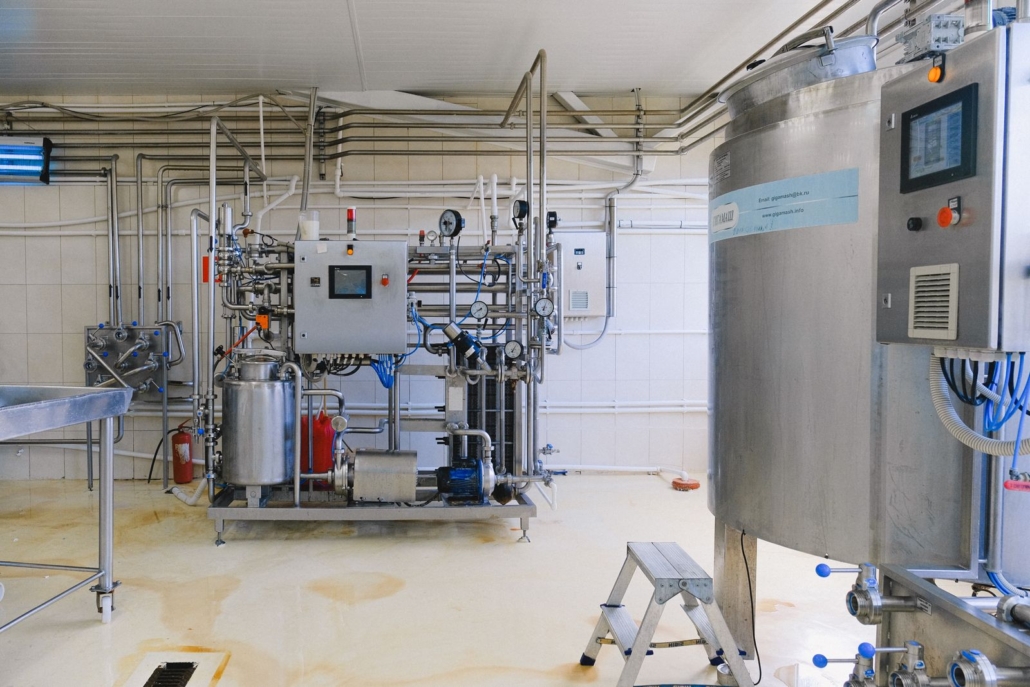
Imagine a business owner looking at a piece of equipment that costs $90,000.
The equipment is needed. The business can put it to work. Nobody is debating whether it would be useful.
The question is how to pay for it.
The vendor offers a lease at $1,850 per month.
That sounds considerably more comfortable than writing a $90,000 check.
And I understand the appeal.
Ninety thousand dollars is a meaningful amount of money. Eighteen hundred and fifty dollars sounds like something we could fit into the monthly budget.
But before we congratulate ourselves on finding the affordable option, I’d like to know what happens over the next five years.
Because the smallest monthly payment is not necessarily the least expensive decision.
And the least expensive decision isn’t necessarily the best one, either.
That’s what makes a lease-versus-buy analysis worth doing.
The Real Question Isn’t Whether Leasing or Buying Is Better
When a business asks me whether it should lease or buy equipment, I don’t think there’s a universal answer.
I want to know what the equipment will do, how long the company expects to need it, what the alternatives actually cost, and how each choice affects cash.
A lease may preserve cash today but cost more over the full term.
Buying may cost less overall but leave the business with too little liquidity.
Financing a purchase may provide a useful middle ground, although debt payments and loan conditions matter.
And the equipment itself might become obsolete long before anybody expected.
The correct answer depends on the business.
Which is mildly inconvenient for anyone hoping I can solve the whole thing with a slogan.
Start with three questions
Before looking at a payment quote, I’d ask:
- How long will we realistically use this equipment?
- What will each option cost over that same period?
- What happens to the business’s cash position if we choose it?
I also want to know whether the equipment will produce enough benefit to justify acquiring it at all.
A lease-versus-buy comparison tells us how to obtain the asset.
It doesn’t prove the asset is worth obtaining.
That’s a separate question, and an important one.
Let’s Compare a $90,000 Equipment Purchase With a Lease
We’ll use a hypothetical manufacturing company considering a new machine.
The company expects to use it for five years.
Here are the assumptions:
| Item | Buy | Lease |
|---|---|---|
| Equipment purchase price | $90,000 | — |
| Upfront payment | $90,000 | $0 |
| Monthly lease payment | — | $1,850 |
| Comparison period | 5 years | 5 years |
| Maintenance | $3,000/year | Included |
| Estimated value after 5 years | $18,000 | No ownership |
| End-of-term fees | — | $0 assumed |
We’re assuming payments occur at the end of each month, the lease has no additional fees, and the company can return the machine after five years without further obligation.
Those assumptions need to be checked against an actual contract.
For now, we’re deliberately keeping taxes and financing out of the first comparison so we can see the basic economics clearly.
What Would Buying Cost?
The company pays $90,000 upfront.
Over five years, it expects to spend another $15,000 on maintenance.
At the end of the period, it estimates it can sell the equipment for $18,000.
So the five-year net cash cost is:
$90,000 + $15,000 − $18,000 = $87,000
That’s an estimated $87,000 over five years.
The business owns the machine throughout the period and can sell it afterward.
Of course, the $18,000 resale estimate isn’t guaranteed.
The equipment market might change.
The machine might wear out faster than expected.
Or somebody might invent a newer version that does the same work in half the time.
Technology has a charming habit of making perfectly good purchases look ancient.
So I would test that resale assumption rather than treat it as a promise.
What Would Leasing Cost?
The lease costs $1,850 per month for 60 months.
$1,850 × 60 = $111,000
Maintenance is included.
At the end of the lease, the company returns the equipment.
The estimated total is therefore $111,000, assuming no other charges.
Let’s put the two choices together.
| Five-year comparison | Buy | Lease |
|---|---|---|
| Initial payment | $90,000 | $0 |
| Payments over term | $0 | $111,000 |
| Maintenance | $15,000 | Included |
| Resale proceeds | −$18,000 | $0 |
| Estimated net cash cost | $87,000 | $111,000 |
Buying appears $24,000 less expensive in undiscounted dollars.
That’s a meaningful difference.
But I’m not ready to sign the purchase order yet.
Because buying also requires $90,000 today.
And I need to know what else that money is supposed to do.
The $24,000 Difference Doesn’t Tell the Whole Story
Suppose the company has $150,000 in available operating cash.
Buying the equipment outright would reduce that to $60,000 before considering other near-term cash movements.
That might be perfectly manageable.
Or it might leave the business uncomfortably exposed to payroll, inventory purchases, debt payments, and customer collection delays.
I wouldn’t call that a good decision simply because the five-year cost is lower.
I’d want to see the cash forecast. I’ve written more about how much cash a small business should keep in reserve, because that cushion matters when an investment consumes operating cash.
If the business needs that $90,000 to support operations, leasing could be worth the additional cost.
Not because the lease is cheaper.
Because preserving liquidity has value.
This is where financial decisions get interesting.
The spreadsheet may tell us which option has the lowest cost.
It takes some judgment to determine which option the business can safely afford.
Let’s Account for When the Money Is Paid
There’s another issue with our comparison.
The $90,000 purchase happens today.
Lease payments happen over five years.
A dollar paid today and a dollar paid five years from now aren’t economically equivalent.
That’s why I would also calculate the present value of each option.
Present value converts future payments into today’s dollars using a discount rate that reflects the company’s financing costs and relevant risks.
For illustration, let’s use an 8% annual effective discount rate.
That isn’t a universal rate or a recommendation. A real analysis should use a rate appropriate to the business and the cash flows being compared.
For this simplified example, I would use a consistent monthly rate derived from the annual rate.
Present value of buying
Buying involves:
- $90,000 paid immediately.
- $3,000 in maintenance at the end of each year.
- $18,000 in estimated resale proceeds at the end of year five.
Discounting those future maintenance payments and resale proceeds at 8% gives an estimated present-value cost of approximately $89,700.
Present value of leasing
The lease requires 60 monthly payments of $1,850.
Discounting those payments using the monthly equivalent of the same 8% annual rate gives an estimated present-value cost of approximately $91,600.
| Comparison | Buy | Lease |
|---|---|---|
| Undiscounted net cost | $87,000 | $111,000 |
| Approximate present-value cost | $89,700 | $91,600 |
Now the difference is closer to $1,900 in today’s dollars, rather than $24,000.
That’s a much narrower decision.
And it changes how I’d approach the conversation.
If preserving cash and avoiding maintenance uncertainty are worth more than approximately $1,900 to this company, the lease may be quite reasonable.
If cash is plentiful and the equipment is likely to remain useful, buying may still be preferable.
Neither answer would surprise me.
The point is that we now have a more meaningful comparison.
What If the Company Finances the Purchase Instead?
There’s another option worth examining.
The company could buy the equipment using a loan.
That means it owns the asset while spreading the cash payments over time.
I would request the actual financing quote and compare:
- Down payment and financed amount.
- Interest rate and repayment schedule.
- Origination fees and other charges.
- Maintenance and repair costs.
- Ownership and resale value.
- Collateral, guarantees, and loan restrictions.
- Cash remaining available after the transaction.
Financing is not automatically the middle-priced choice.
It depends on the loan terms.
And a loan payment that looks comfortable today may become less comfortable if sales decline or collections slow.
I’d model that possibility before committing.
There is something reassuring about discovering a potential problem in a spreadsheet rather than on the morning a payment is due.
The Contract Can Change Everything
I would never compare a lease quote with a purchase price without reading the lease terms.
Not every arrangement called a lease works the same way.
Some leases allow the company to return equipment at the end.
Others include a purchase option.
Some have a nominal buyout.
Others require the company to pay fair market value to keep the asset.
There may also be return conditions, usage restrictions, insurance requirements, termination penalties, and end-of-term charges.
Those details matter.
A $1 buyout arrangement, for example, can have economics much closer to financed ownership than to a true return-at-end lease.
And a lower monthly payment can look less attractive when there’s a substantial buyout waiting at the finish line.
It’s a little like agreeing to a wonderfully affordable family vacation before discovering the advertised price doesn’t include luggage, meals, transportation, or apparently breathing near the swimming pool.
I would like the complete price, please.
The same principle applies here.
Don’t Let the Tax Deduction Make the Decision for You
Taxes can materially change the comparison.
Purchased equipment may qualify for depreciation deductions, potentially including accelerated deductions depending on current tax law and the business’s circumstances.
Lease payments may receive different tax treatment depending on the arrangement.
And the accounting classification of a lease isn’t necessarily identical to its tax treatment.
That’s why I’d have the company’s tax professional confirm the applicable rules and timing before including tax benefits in the final analysis.
I wouldn’t assume a particular deduction is available, or that the business can use it immediately.
I also wouldn’t let the phrase tax write-off persuade us to spend money we otherwise wouldn’t spend.
A deduction can reduce the after-tax cost of an expense.
It does not make the expense disappear.
My preference is to evaluate the business case first, then calculate the actual after-tax cash flows for each option.
The Michigan State University financial management text explains the present-value framework behind this type of comparison.
The Decision I’d Be Most Careful About
Suppose our manufacturer chooses to buy the equipment because it appears slightly less expensive on a present-value basis.
Three months later, a major customer delays payment.
The company still has payroll, inventory purchases, and debt obligations.
Now the owner is trying to arrange emergency financing.
Was buying the wrong decision?
Not necessarily.
But the company may have underestimated the value of keeping cash available.
That’s why I wouldn’t evaluate this decision using the equipment analysis alone.
I’d connect it to a forecast showing what happens to cash under each option. That’s the practical value of financial scenario planning.
Then I’d test a few realistic scenarios.
What if sales are 15% lower than expected?
What if a major customer pays 30 days late?
What if maintenance costs exceed the estimate?
What if the machine is only needed for three years instead of five?
And what if the business grows faster than expected and needs additional working capital?
Those are the situations that reveal whether an option is genuinely affordable.
Not merely attractive on paper.
Here’s How I’d Make the Decision
For a real business, I’d put the alternatives into one decision model. I’d also connect it to capital expenditure forecasting, so the purchase timing and downstream cash effects don’t disappear into a single annual budget number.
The comparison would use the same time period and include every material cash flow.
Then I’d evaluate four things.
First, the full economic cost.
I’d calculate present-value costs using appropriate assumptions, including tax effects when confirmed.
Second, liquidity.
I’d determine how much cash the business needs to preserve and what happens under each option.
Third, flexibility.
I’d consider how long the equipment will remain useful, what happens if the company changes direction, and how easy it is to exit the arrangement.
Fourth, operational risk.
I’d consider maintenance responsibility, downtime, equipment availability, and whether the contract creates obligations the business may struggle to meet.
Then I’d make a recommendation.
Not necessarily the cheapest option.
The option that best fits the company’s financial position and business needs.
And I’d document the assumptions so we know what would cause us to reconsider.
Sometimes Paying More Is the Sensible Choice
I think business owners deserve a better answer than “leasing is better for cash flow” or “buying is cheaper in the long run.”
Both statements can be true in some circumstances.
Neither is a complete decision.
In our example, buying appears less expensive over five years.
But after considering the timing of payments, the present-value difference is relatively small.
If leasing preserves cash the company genuinely needs, that extra cost may be justified.
If the company has ample liquidity and expects to use the equipment for years, buying may make more sense.
And if the equipment won’t produce sufficient economic benefit under either arrangement, perhaps the right answer is neither.
I realize that’s not the answer the equipment salesperson was hoping for.
But I’d rather disappoint a salesperson than surprise a business owner with a financial commitment that doesn’t work.
Before You Sign, I’d Be Happy to Look at the Alternatives
If you’re considering an equipment purchase, a major investment, or another decision where several options look reasonable, this is exactly the sort of question I enjoy working through.
My Scenario Modeling and Decision Support services focus on comparing alternatives, testing assumptions, and understanding what a decision could mean for the business.
Because a confident decision isn’t one where everything is guaranteed to work out.
It’s one where you’ve done the work to understand what you’re agreeing to.






When you’re deciding whether to lease or buy equipment, which assumption changes the answer most often: utilization, maintenance, financing terms, or how long you’ll really keep the asset?