Sarah Schlott
  • Home
  • About
  • Services
    • FP&A Consulting
      • Forecasting & Planning
      • Scenario Modeling
      • Management Reporting
      • Cash Forecasting
      • FP&A Systems & Processes
      • Variance Analysis
      • KPI Dashboards
      • Board Reporting
      • FP&A for PE-Backed Companies
    • Accounting Services
      • Bookkeeping Support
      • Month-End Close
      • Financial Statements
      • Accounts Payable
      • Accounts Receivable
      • Accounting Cleanup
  • FP&A Resources
    • FP&A Library
    • Tools & Templates
    • Blog
  • Contact
  • Click to open the search input field Click to open the search input field Search
  • Menu Menu
Finance

The 2,232-Acre Osceola Data Center Story Needs One Important Asterisk
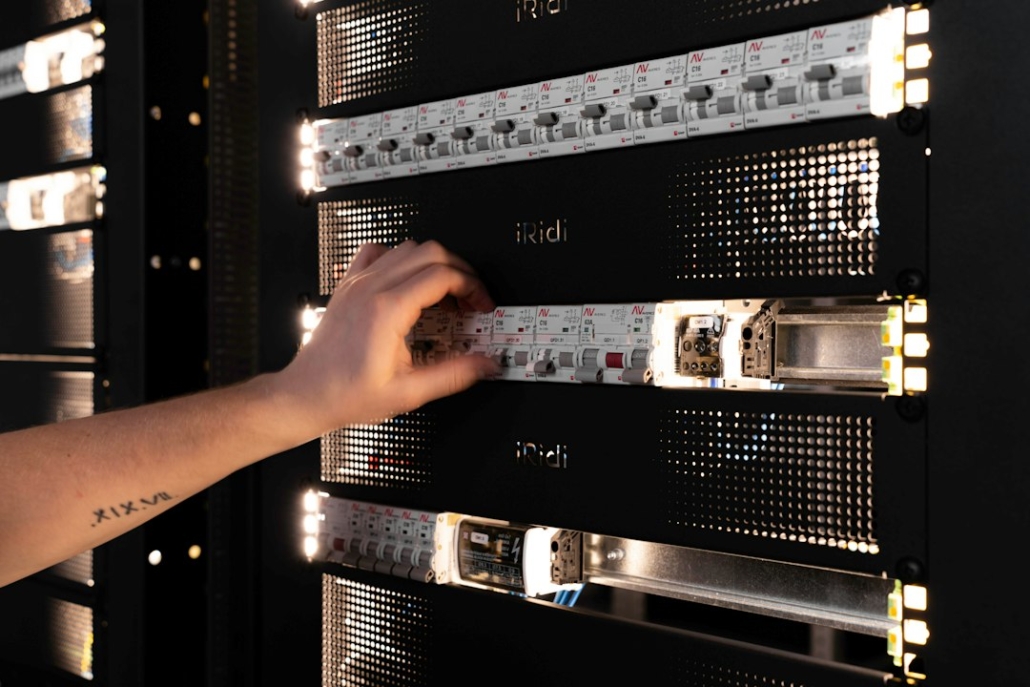
Electrical infrastructure representing hyperscale data-center development

I have a rule for business headlines containing words like massive, transformative or could become.

I keep reading until I find the verb that tells me what has actually happened.

That’s what I did with the 2,232-acre Osceola County property being marketed for hyperscale data-center development.

The scale is enormous. Recent reporting describes a site nearly three times the size of Central Park, with major power requirements and understandable concern from nearby residents. The recent coverage is here.

It’s absolutely worth watching.

But the word I’m circling is marketed.

Not built.

Not operating.

Not even, based on the reporting I’ve seen, a committed hyperscaler with shovels waiting in a parking lot.

Marketed.

That doesn’t make the story less interesting to me.

It tells me which column I put it in.

I’ve seen this movie in forecasts

Finance has a version of this problem.

Sales has a promising conversation.

Then it becomes an opportunity.

Then somebody says the customer “really likes us.”

By the time the budget reaches Finance, the revenue has somehow acquired a start date.

No contract. No purchase order. Just vibes with a month attached.

I don’t ignore the opportunity.

I just don’t confuse the pipeline with the forecast.

That’s how I’m looking at Osceola.

A property this large being positioned for data-center use is a real signal. It says developers and landowners believe Central Florida could compete for infrastructure at a scale we haven’t traditionally associated with the region.

I want to know more.

I just don’t want to write the economic impact into the model before somebody actually commits the capital.

If this becomes real, I want the spreadsheet before the celebration

A hyperscale data center can involve staggering amounts of investment.

It can also involve staggering amounts of power.

So if a project eventually moves forward here, these are the questions I’d want answered:

How much private capital is actually committed?

How much infrastructure has to be built around it?

Who pays for that infrastructure?

How many construction jobs are created?

How many permanent jobs remain afterward?

What do those jobs pay?

What tax revenue is expected?

What incentives are involved?

What happens to utility capacity and rates?

I realize this is less exciting than rendering a giant futuristic building and putting lens flare behind it.

I still want the spreadsheet.

I don’t think asking about costs makes someone anti-growth

This part matters to me.

When a large development comes along, the conversation has a habit of splitting into two teams.

One side is thrilled about investment and jobs.

The other is worried about infrastructure, utilities, land use and the community around it.

I don’t think those positions are mutually exclusive.

I can want Central Florida to attract major technology investment and still want to know what it costs.

I can think a data center might diversify the economy and still ask how many permanent jobs it produces.

I can support growth and still believe the people already living nearby deserve an honest accounting of the tradeoffs.

That’s not pessimism.

That’s capital allocation.

Every worthwhile investment has benefits and costs. Pretending one side doesn’t exist doesn’t make the decision better.

AI has made this a finance story

A few years ago, I could have treated data centers as infrastructure news and moved on.

That’s harder now.

Every company talking about AI eventually runs into the physical reality underneath it.

Compute lives somewhere.

Servers use power.

Facilities require land.

Infrastructure requires capital.

Capital expects a return.

The cloud, disappointingly, is not actually a cloud.

It’s buildings, equipment, electricity and a very serious utility bill.

As AI demand grows, finance leaders are going to have to understand more of that physical cost structure, even if we would prefer to stay safely inside Excel where the air conditioning is already paid for.

The upside could be substantial

I don’t want the caution in this article to obscure that.

If a hyperscaler actually commits to a development of this scale, I think the knock-on effects could be meaningful for Central Florida.

Construction. Electrical contractors. Engineering. Security. Maintenance. Network infrastructure. Professional services. Suppliers.

Potentially other technology investment nearby.

Those second-order effects are exactly what I’d start mapping if the project crosses from possibility into commitment.

I’d also want scenarios, because the outcome isn’t binary.

A project can be delayed. Reduced. Phased. Redesigned. Expanded.

That’s where scenario modeling becomes useful.

Not because I can predict exactly what will happen.

Because I can stop pretending only one thing can.

For now, mine still has an asterisk

I think this is one of the more interesting Central Florida development stories to watch.

Two thousand two hundred thirty-two acres gets my attention.

So does the possibility of hyperscale infrastructure arriving in Osceola County.

But right now I have it in my pipeline column.

I’m watching for the buyer.

The approvals.

The infrastructure commitments.

The actual capital.

The construction schedule.

Then I’ll start moving it across the page.

I’ve spent too much of my career around forecasts to let “could become” quietly turn into “will be.”

Those two phrases have caused enough budget meetings already.

If your business is trying to plan around possibilities that matter but aren’t certain yet, that’s the work I do in forecasting and planning and FP&A consulting in Orlando.
October 6, 2026/0 Comments/by Sarah Schlott
Tags: Central Florida Economy, Data Centers, Orlando Business, Orlando Economy, Osceola County
Share this entry
  • Facebook Facebook Share on Facebook
  • X-twitter X-twitter Share on X
  • Linkedin Linkedin Share on LinkedIn
  • Reddit Reddit Share on Reddit
  • Mail Mail Share by Mail
https://sarahgschlott.com/wp-content/uploads/2026/10/Osceola-data-center-infrastructure.jpg 720 1080 Sarah Schlott https://sarahgschlott.com/wp-content/uploads/2026/08/icon-10c-two-blob-light_clearspace-300x300.png Sarah Schlott2026-10-06 19:00:002026-10-06 15:50:16The 2,232-Acre Osceola Data Center Story Needs One Important Asterisk
You might also like
Stetson University campus in DeLand, Florida Private Colleges Have a Revenue Problem That Looks Familiar
Orlando Florida skyline at Lake Eola Orlando Tourism Doesn’t Get to Coast on Being Orlando
Industrial commercial property representing Orlando's light-industrial market A $103 Million Orlando Industrial Deal Says More Than the Price Tag
Contractors using technology at a jobsite representing Contractor+ field-service software Contractor+ Is Growing. I’m More Interested in What the Cash Has to Do Next.
Shipping boxes representing Statusphere's expanded Orlando fulfillment operations Statusphere Just Made a Very Physical Bet on Scaling Software
Florida suburban homes with palm trees The Orlando Housing Story I’m Watching Isn’t Home Prices. It’s Household Pressure.
0 replies

Leave a Reply

Want to join the discussion?
Feel free to contribute!

Join the Discussion Cancel reply

What do you think? No account or email required.

Latest Posts

  • Contractor+ Is Growing. I’m More Interested in What the Cash Has to Do Next.
  • Private Colleges Have a Revenue Problem That Looks Familiar
  • The Orlando Housing Story I’m Watching Isn’t Home Prices. It’s Household Pressure.
  • Bookkeeping vs. Accounting: What Does Your Business Actually Need?
  • The 2,232-Acre Osceola Data Center Story Needs One Important Asterisk
  • Orlando Tourism Doesn’t Get to Coast on Being Orlando
  • Statusphere Just Made a Very Physical Bet on Scaling Software
  • A $103 Million Orlando Industrial Deal Says More Than the Price Tag
  • How Much Do Accounting Services Cost in Orlando?
  • Carvana Is Adding 100 Orlando-Area Jobs. The Number I’m Watching Is What Comes Next.
  • Accounting Services in Orlando: What Should a Growing Business Actually Expect?
  • The FP&A Calendar: Build a Finance Rhythm That Leaves Time to Think
  • How Often Should You Update a Financial Forecast?
  • Capital Expenditure Forecasting: The Annual CapEx Number Is Not the Forecast
  • Gross Margin Forecasting: Revenue Can Be Right and the Economics Still Be Wrong
  • Forecast Assumptions: The Model Should Remember What Changed
  • Working Capital Forecasting: Why the P&L Can Be Right and Cash Still Be Wrong
  • Operating Expense Forecasting: Stop Treating Every Cost the Same
  • Month-End Close and FP&A: When Are the Actuals Actually Ready?
  • Ad Hoc Reporting in FP&A: When the Same Quick Question Keeps Coming Back
  • Headcount Forecasting: Why Approved Hires Keep Breaking the Plan
  • Management Reporting Pack: What CFOs Actually Need Every Month
  • Budget Variance Analysis: How FP&A Finds What Actually Matters
  • FP&A Software vs. Excel: When Has Finance Actually Outgrown Spreadsheets?
  • What Is FP&A? A Practical Guide to Financial Planning & Analysis
  • FP&A Software: When Does Your Finance Team Actually Need It?
  • Driver-Based Forecasting: How to Find the Right Business Drivers
  • Financial Forecasting Methods: How to Choose the Right One
  • Financial Scenario Planning: How FP&A Can Build Scenarios That Actually Help Management
  • AI Agents in Finance: What Should CFOs Actually Let Them Do?

Sarah Schlott

FP&A consulting, forecasting, accounting support and finance strategy for CFOs and growing finance teams.

Work With Sarah →

FP&A

FP&A ConsultingForecasting & PlanningScenario Modeling & Decision SupportManagement ReportingCash ForecastingFP&A Function & Finance SystemsVariance AnalysisKPI DashboardsBoard ReportingFP&A for PE-Backed CompaniesOrlando FP&A Consulting

Accounting

Accounting ServicesAccounting & Bookkeeping SupportMonth-End Close & Financial ReportingFinancial Statements & ReportingAccounts Payable SupportAccounts Receivable SupportAccounting Cleanup & Catch-UpOrlando Accounting Services
© Copyright - Sarah Schlott
Link to: Orlando Tourism Doesn’t Get to Coast on Being Orlando Link to: Orlando Tourism Doesn’t Get to Coast on Being Orlando Orlando Tourism Doesn’t Get to Coast on Being OrlandoOrlando Florida skyline at Lake Eola Link to: Bookkeeping vs. Accounting: What Does Your Business Actually Need? Link to: Bookkeeping vs. Accounting: What Does Your Business Actually Need? Bookkeeping vs. Accounting: What Does Your Business Actually Need?
Scroll to top Scroll to top Scroll to top