
Statusphere Just Made a Very Physical Bet on Scaling Software
I have spent enough time around software companies to know we enjoy certain words.
Scalable.
Automated.
Asset-light.
Digital.
They all sound lovely in a board deck.
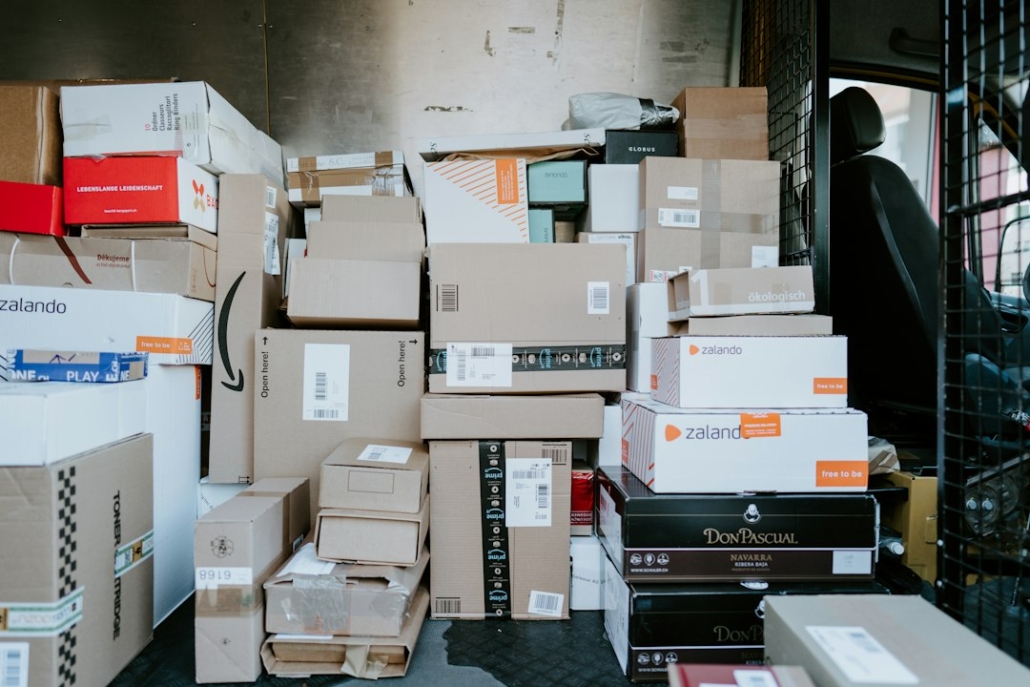
Then an Orlando software company goes from roughly 4,000 square feet of fulfillment space to 23,992 square feet, and suddenly the cloud needs a loading dock.
That’s why Statusphere’s expansion caught my attention.
The Orlando-area influencer-marketing technology company has opened a much larger fulfillment operation to support enterprise creator campaigns. The expansion follows its $18 million Series A earlier this year, which brought total funding to $27 million. Statusphere says it has facilitated more than 250,000 influencer collaborations. The recent expansion report is here.
I don’t think this is just a warehouse story.
I think it’s a useful reminder that software businesses eventually have to scale whatever messy thing happens after somebody clicks the button.
I love SaaS until somebody has to mail something
Statusphere helps brands run micro-influencer campaigns at scale.
That sounds digital because most of what we see is digital.
Creators. Content. Dashboards. AI. Campaign reporting.
But if a brand wants 2,000 creators to make content about an actual product, 2,000 actual products have to get to 2,000 actual humans.
The product does not teleport because the software has an API.
Somebody receives it.
Stores it.
Picks it.
Packs it.
Ships it.
Tracks it.
And, if my own household is representative of the American logistics system, somebody eventually asks why a package that was definitely delivered is nowhere to be found.
I have children. I run this investigation several times a week.
“Did anybody bring in the box from the porch?”
Silence.
Excellent. Strong chain of custody.
The six-times-bigger warehouse is the part I’d model
Statusphere’s new facility is roughly six times the size of its prior fulfillment footprint.
If I were sitting in FP&A there, I would have questions.
Not skeptical questions. Operating questions.
What campaign volume makes 24,000 square feet make sense?
How quickly does capacity get absorbed?
What happens to fulfillment cost per shipment as volume rises?
How much labor scales with campaigns?
How much can the new warehouse-management system automate?
What utilization do we need for the investment to produce the economics we expect?
What does peak holiday volume look like?
Because “we need more space” is not really the finance question.
The finance question is what that space lets the company do that it could not do before, and what has to happen for the investment to earn its keep.
This is where the SaaS gross-margin conversation gets more interesting
I’ve always thought “software has great margins” is one of those statements that is true right up until it becomes too useful.
What software?
Doing what?
With what services attached?
Statusphere’s model deliberately includes fulfillment because fulfillment solves a real problem for its customers.
That can make the platform more valuable.
It can also make the cost structure more interesting than a pure software company where the closest thing to inventory is branded Patagonia vests.
I would want to understand the economics by campaign type and customer.
Software revenue.
Fulfillment revenue or cost.
Shipping.
Labor.
Kitting complexity.
Creator volume.
Customer retention.
The question isn’t whether physical operations are “bad” for SaaS.
I think that’s the wrong frame.
The question is whether owning the physical operation creates enough customer value and competitive advantage to justify the capital and complexity.
My 1990s brain actually likes this
I grew up when “online” and “real life” were treated like separate countries.
You logged onto AOL.
The modem made the sound.
Your mother picked up the phone.
Your entire digital future collapsed.
Very clear boundaries.
That distinction looks increasingly silly now.
Digital businesses affect physical behavior. Physical products generate digital content. Creator campaigns influence search. AI systems ingest human-generated content. Software coordinates boxes moving through a warehouse in Orlando.
Statusphere’s expansion is interesting to me because the company appears to be building around that overlap rather than pretending the physical part is somebody else’s problem.
The Series A makes the timing more interesting
Statusphere raised $18 million in January, led by Volition Capital, bringing total funding to $27 million. The company said the capital would support expansion of its AI-powered platform and product-discovery capabilities. The funding announcement is here.
Now we can see at least one place growth capital is showing up operationally.
I like that.
Funding announcements are easy to celebrate.
The more interesting work starts afterward.
Where does the money go?
What capacity gets built?
Which constraints disappear?
Which new constraints appear?
Does growth accelerate?
Does efficiency improve?
Capital is not the result.
It’s an input.
I tell my kids a version of this every time they explain that buying another organizer will finally make their room clean.
The Container Store is not a strategy.
Neither is a Series A.
I’d watch whether fulfillment becomes part of the moat
This is the strategic question I find most interesting.
If Statusphere can combine creator matching, campaign software, compliance, reporting, rights management and fulfillment into one operating system, the warehouse isn’t simply overhead.
It may be part of the product.
That distinction matters.
A competitor can copy a feature.
It is harder to copy software, operating processes, logistics infrastructure, creator relationships and accumulated campaign data all at once.
I don’t know yet how durable that advantage becomes.
That’s what I’d watch.
But I understand the thesis.
The thing I’d want on the dashboard
If I were helping build the driver-based plan for this business, I would not let “creator campaigns grow” sit in the model as one convenient percentage.
I’d want creators activated, products shipped, shipments per campaign, cost per shipment, warehouse utilization, labor productivity, campaign size, enterprise customer growth, retention and revenue per customer.
Then I’d want to know where the next bottleneck appears.
Because that’s usually what scale is.
You solve one bottleneck and discover the next one was waiting behind it like the final level of a Nintendo game.
Except Bowser rarely sends an invoice for warehouse labor.
This is the Orlando SaaS story I like
I like seeing an Orlando technology company raise serious capital.
I like seeing it invest locally.
But the reason I’m watching Statusphere is more specific.
It’s building a software business where the digital and physical operating models have to scale together.
That makes the finance work harder.
It also makes it more interesting.
The headline is that the warehouse grew from about 4,000 square feet to nearly 24,000.
My question is what happens to the economics when all that new capacity starts filling up.
That’s the sequel I want.
Preferably without the 1990s tradition of making the sequel inexplicably worse than the original.
I write about SaaS operating models and the numbers underneath growth in my FP&A Library. If your SaaS company is trying to turn growth into a usable operating plan, see my FP&A consulting work.







Leave a Reply
Want to join the discussion?Feel free to contribute!