Sarah Schlott
  • Home
  • About
  • Services
    • FP&A Consulting
      • Forecasting & Planning
      • Scenario Modeling
      • Management Reporting
      • Cash Forecasting
      • FP&A Systems & Processes
      • Variance Analysis
      • KPI Dashboards
      • Board Reporting
      • FP&A for PE-Backed Companies
    • Accounting Services
      • Bookkeeping Support
      • Month-End Close
      • Financial Statements
      • Accounts Payable
      • Accounts Receivable
      • Accounting Cleanup
  • FP&A Resources
    • FP&A Library
    • Tools & Templates
    • Blog
  • Contact
  • Click to open the search input field Click to open the search input field Search
  • Menu Menu
Finance, FP&A

When My FP&A Model Got So Big It Qualified for Its Own Zip Code
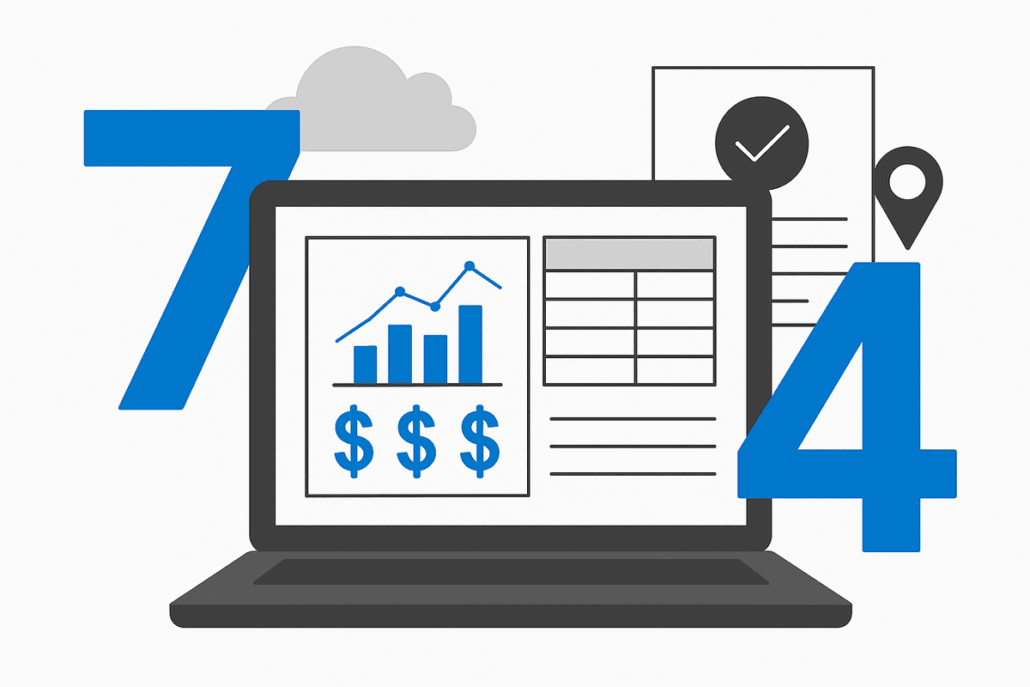
Every finance team has its Frankenstein—the spreadsheet that starts as a modest forecast and metastasizes into a corporate public works project. Mine began as a single tab. By Q3, it was a bureaucratic anthill with 184 tabs, a pivot table the size of a congressional bill, and lookup formulas twisted like the wiring in a Soviet elevator.

Opening it was like wandering into an abandoned industrial park. Rows of half-finished logic. Whole columns marked “DO NOT TOUCH” in the desperate caps lock of the already defeated. Somewhere deep in “Churn Assumptions – APAC SMB,” a SUMIF colony had achieved sentience and was probably plotting secession.

The board loved it—at first. “So comprehensive!” they said, mistaking breadth for competence, the same way Congress mistakes 1,200 pages of pork-barrel spending for legislation. Then, like a scandal breaking in slow motion, they realized it was unusable.

And that’s the rot at the core of most FP&A models: They’re not built to make decisions. They’re built to survive questions. You bury assumptions under enough tabs and cell references, and nobody has the energy to challenge them. Complexity becomes the shield. You can’t lose an argument if no one can find the math.

The cost? Real and immediate. Models this bloated turn CFOs into archivists of their own work. Decisions crawl. Risk hides in the shadows. And by the time the numbers make sense, the opportunity that demanded them is already dead.

If your model is too complicated to explain in one breath, it’s already a liability.

The Four-Step Exit From Spreadsheet Authoritarianism

1. Physics Before Cosmetics
Tie every metric to business drivers that don’t change—unit economics, sales velocity, churn patterns—rather than the political weather inside the C-suite. ARR doesn’t get a new definition every quarter.

2. The 90-Minute Rule
If you can’t refresh the forecast in an hour and a half, it’s a liability, not a tool. Keep only what moves the outcome: growth rate, churn, CAC, hiring velocity. Everything else is decoration.

3. Scenario Batching
No more “custom what-ifs” for every executive mood swing. Establish three sets—base, stretch, crisis—and teach leadership to work inside them. If they can’t, the problem isn’t your spreadsheet.

4. One-Tab Governance
One clean, human-readable summary tab. Board-ready. No scavenger hunts, no hidden macros, no “secret” tab only the model owner understands.

The Real Job of a CFO

Founders and CFOs aren’t paid to run data mausoleums. The job is to make fast, confident decisions under pressure. The tool that lets you do that is your model. The tool that keeps you from doing that is also your model—when it’s designed like a city zoning map.

A good model is a scalpel. A bad model is a museum exhibit. And nobody runs a business from a museum.

If your CEO calls at 6 a.m. asking whether you can extend runway by three months, you should be able to answer before coffee—without booting up a file that now requires its own municipal utilities department.

Because once your model needs its own zip code, it’s not a decision tool. It’s a political artifact. And political artifacts don’t run companies. You do.


August 15, 2025/1 Comment/by Sarah Schlott
Tags: financial decision-making, FP&A model, SaaS Forecasting
Share this entry
  • Facebook Facebook Share on Facebook
  • X-twitter X-twitter Share on X
  • Linkedin Linkedin Share on LinkedIn
  • Reddit Reddit Share on Reddit
  • Mail Mail Share by Mail
https://sarahgschlott.com/wp-content/uploads/2025/08/ChatGPT-Image-Aug-13-2025-11_53_42-PM-1.png 800 1200 Sarah Schlott https://sarahgschlott.com/wp-content/uploads/2026/08/icon-10c-two-blob-light_clearspace-300x300.png Sarah Schlott2025-08-15 04:30:152026-10-02 09:04:10When My FP&A Model Got So Big It Qualified for Its Own Zip Code
You might also like
Why My VLOOKUP Has More Trust Issues Than My Ex
Cost to Serve: The Line Item You’d Rather Ghost Than Model
1 reply
  1. Sarah Schlott
    Sarah Schlott says:
    October 2, 2026 at 12:33 pm

    How big did your model get before you finally admitted it needed to be rebuilt?

    Reply

Leave a Reply

Want to join the discussion?
Feel free to contribute!

Join the Discussion Cancel reply

What do you think? No account or email required.

Latest Posts

  • Contractor+ Is Growing. I’m More Interested in What the Cash Has to Do Next.
  • Private Colleges Have a Revenue Problem That Looks Familiar
  • The Orlando Housing Story I’m Watching Isn’t Home Prices. It’s Household Pressure.
  • Bookkeeping vs. Accounting: What Does Your Business Actually Need?
  • The 2,232-Acre Osceola Data Center Story Needs One Important Asterisk
  • Orlando Tourism Doesn’t Get to Coast on Being Orlando
  • Statusphere Just Made a Very Physical Bet on Scaling Software
  • A $103 Million Orlando Industrial Deal Says More Than the Price Tag
  • How Much Do Accounting Services Cost in Orlando?
  • Carvana Is Adding 100 Orlando-Area Jobs. The Number I’m Watching Is What Comes Next.
  • Accounting Services in Orlando: What Should a Growing Business Actually Expect?
  • The FP&A Calendar: Build a Finance Rhythm That Leaves Time to Think
  • How Often Should You Update a Financial Forecast?
  • Capital Expenditure Forecasting: The Annual CapEx Number Is Not the Forecast
  • Gross Margin Forecasting: Revenue Can Be Right and the Economics Still Be Wrong
  • Forecast Assumptions: The Model Should Remember What Changed
  • Working Capital Forecasting: Why the P&L Can Be Right and Cash Still Be Wrong
  • Operating Expense Forecasting: Stop Treating Every Cost the Same
  • Month-End Close and FP&A: When Are the Actuals Actually Ready?
  • Ad Hoc Reporting in FP&A: When the Same Quick Question Keeps Coming Back
  • Headcount Forecasting: Why Approved Hires Keep Breaking the Plan
  • Management Reporting Pack: What CFOs Actually Need Every Month
  • Budget Variance Analysis: How FP&A Finds What Actually Matters
  • FP&A Software vs. Excel: When Has Finance Actually Outgrown Spreadsheets?
  • What Is FP&A? A Practical Guide to Financial Planning & Analysis
  • FP&A Software: When Does Your Finance Team Actually Need It?
  • Driver-Based Forecasting: How to Find the Right Business Drivers
  • Financial Forecasting Methods: How to Choose the Right One
  • Financial Scenario Planning: How FP&A Can Build Scenarios That Actually Help Management
  • AI Agents in Finance: What Should CFOs Actually Let Them Do?

Sarah Schlott

FP&A consulting, forecasting, accounting support and finance strategy for CFOs and growing finance teams.

Work With Sarah →

FP&A

FP&A ConsultingForecasting & PlanningScenario Modeling & Decision SupportManagement ReportingCash ForecastingFP&A Function & Finance SystemsVariance AnalysisKPI DashboardsBoard ReportingFP&A for PE-Backed CompaniesOrlando FP&A Consulting

Accounting

Accounting ServicesAccounting & Bookkeeping SupportMonth-End Close & Financial ReportingFinancial Statements & ReportingAccounts Payable SupportAccounts Receivable SupportAccounting Cleanup & Catch-UpOrlando Accounting Services
© Copyright - Sarah Schlott
Link to: Why I’m Trading LinkedIn Scroll Time for My Own Blog Link to: Why I’m Trading LinkedIn Scroll Time for My Own Blog Why I’m Trading LinkedIn Scroll Time for My Own Blog Link to: 9 Ways a Pivot Table Can Make a CFO Cry in Public Link to: 9 Ways a Pivot Table Can Make a CFO Cry in Public 9 Ways a Pivot Table Can Make a CFO Cry in Public
Scroll to top Scroll to top Scroll to top